A network license server is an area on a network where you can store and manage STK licenses for one or more users. You can configure any computer on your network to act as the network license server if:
- The directory path to licenses on the server is shared.
- All of the clients that access licenses from the server can see it.
AGI recommends that you create a single network license server and configure each instance of STK to request all licenses from that server. You may not be able to access some licenses if one client is attempting to get licenses from two or more network license servers.
A network file server is a good choice for a network license server installation, although any computer that is usually available on the network is acceptable.
Installing the Ansys License Manager
Beginning with STK 12.3, STK only supports network licenses. Administrators need to set up license server machines, and clients need to point to a License Server on either a network or their own machines.
For details on licensing installation, see the License Management Guide included in your installation media at
License Manager installation prerequisites
See Section 2.2.1, License Manager Installation Prerequisites, of the License Management Guide.
Installing the Ansys License Manager on Windows
As an administrator, you can install Ansys License Manager software on Windows in one of two ways. One way is to use the STK installation media, as described below.
- Right-click the <STK Installation Media>\AnsysLicenseManager\winx64\setup.exe file and select Run as administrator.
- If you are installing the License Manager on the same machine where STK will be installed, you can choose to install the Ansys License Manager during the STK install. See Section 2.2.2, License Manager Installation Instructions - Windows, of the License Management Guide for more detailed instructions on completing the Ansys License Manager install. Select Install Ansys License Manager to complete the installation.
Another way to install the Ansys License Manager is to use a direct download of its executable. Go to the AGI Software Downloads website, select the Ansys tab, and select to download the Ansys License Manager ZIP file. Open the installer executable and then follow step 2 above.
Installing the Ansys License Manager on Linux
The following steps enable you, as an administrator, to install Ansys License Manager software on Linux.
- Extract the Ansys License Manager from the archive file by issuing the following command:
- Issue the following command to install the Ansys License Manager:
- See Section 2.2.3, License Manager Installation Instructions - Linux, of the License Management Guide for more detailed instructions on completing the Ansys License Manager install.
- See Section 3.1, Start the Ansys License Manager at System Boot Time, of the License Management Guide for instructions on how to start the license manager automatically.
- See Section 3.2, Start the Ansys Tomcat Server at System Boot Time, of the License Management Guide for instructions on how to start the tomcat server automatically.
If Ansys License Management Center does not open after the install, enter localhost:1084 into any browser to open it.
See the Troubleshooting section for common install errors and their solutions.
Installing the Ansys License Manager silently
You can deploy an Ansys License Manager installation in silent mode on both Windows and Linux systems.
To silently install the Ansys License Manager on Windows systems that will act as license servers, you must run the setup.exe with the -silent and -LM options:
To install the Ansys License Manager on Linux systems that will act as license servers, you must run the INSTALL with the -silent and -LM options:
See Section 2.2.4, Silent License Manager Installation Instructions, of the License Management Guide for more details on a silent installation.
If you need to run FlexLM directly without the Ansys License Management Center, contact support@agi.com.
Adding licenses
If you don't have a license file, you can consult the help page on how to obtain one. Once you receive your license file, see the steps below for adding it to the License Manager.
- In Windows, locate the Ansys License Management Center from the Start menu under ANSYS, Inc. License Manager. On Linux, run the start_lmcenter script located in 'ansys_inc/shared_files/licensing/'
- Select "Add a License File" in the License File Options field.
- Browse to the location of the license file.
- Select the View Status/Start/Stop License Manager from the Home field.
- Click to start the service.
- Once this is set up, you can configure clients to access the server.
If Ansys License Management Center does not open or is already running, enter localhost:1084 into any browser to open it.
You can manually edit the license file if you need to,
The same firewall requirements used in previous versions of the STK application still apply. You need to allow the TCP ports or the lmgrd and ansyslmd (daemon) as exceptions. Ensure that the TCP/IP port 1055 (unless it was changed in the license file) and vendor/daemon ansyslmd.exe located in C:\Program Files\ANSYS Inc\Shared Files\Licensing\winx64 are whitelisted through the firewall. The vendor/daemon ansyslmd.exe selects a dynamic TCP/IP interconnect port by default, but you can specify a static port by modifying the license file's VENDOR line to "VENDOR ansyslmd PORT=1056" if needed.
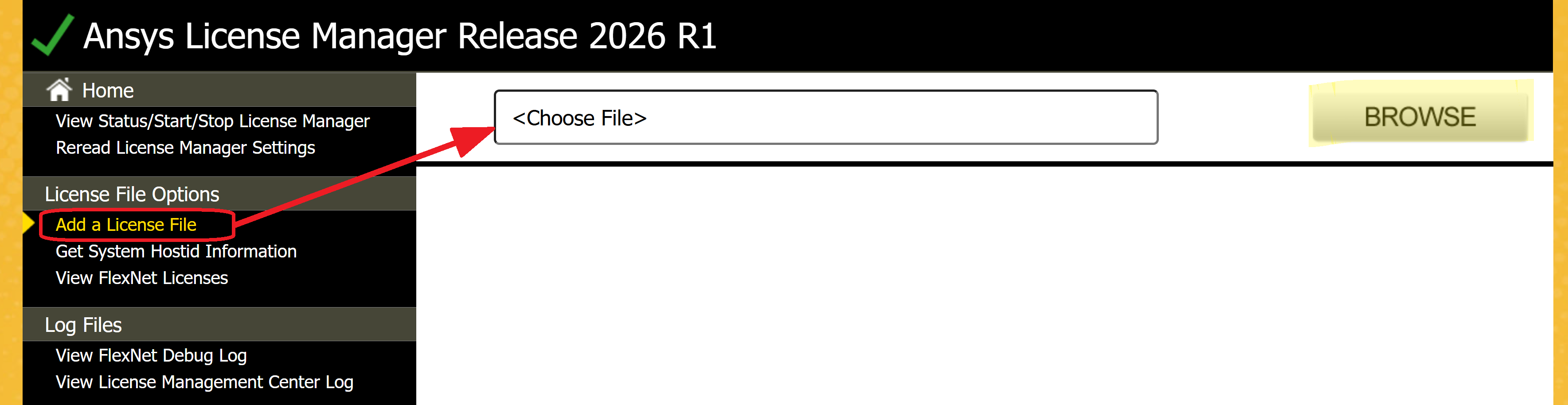
If you have an existing license file(s) on the same server, do not use the Ansys License Manager to browse or load the new file. This action could bump your existing license file into a back-up directory. In this case, simply place your new license file in the directory that the Ansys License Manager expects to find them (for example, C:\Program Files\Ansys Inc\Shared Files\licensing\licensing_files). Then you can stop/restart the server via the View Status/Start/Stop License Manager button.
The new license file has to have the same "Issue Date" as the existing license file. If the two license files do not have the same date of issue and there are matching segments in each file. For example, stk_mission_level1 with an issue date of 01-Jan in the existing license file and stk_mission_level1 with an issue date of 15-Nov in the new license file, the new file overwrites the existing license file instead of adding an additional license to the license pool.
The Ansys License Management Guide has additional information. You can find it in the Ansys License Manager install (C:\Program Files\ANSYS Inc\Shared Files\Licensing\licadmin\docu\ansys_license_management_guide.pdf).
Point the Client to the License Server
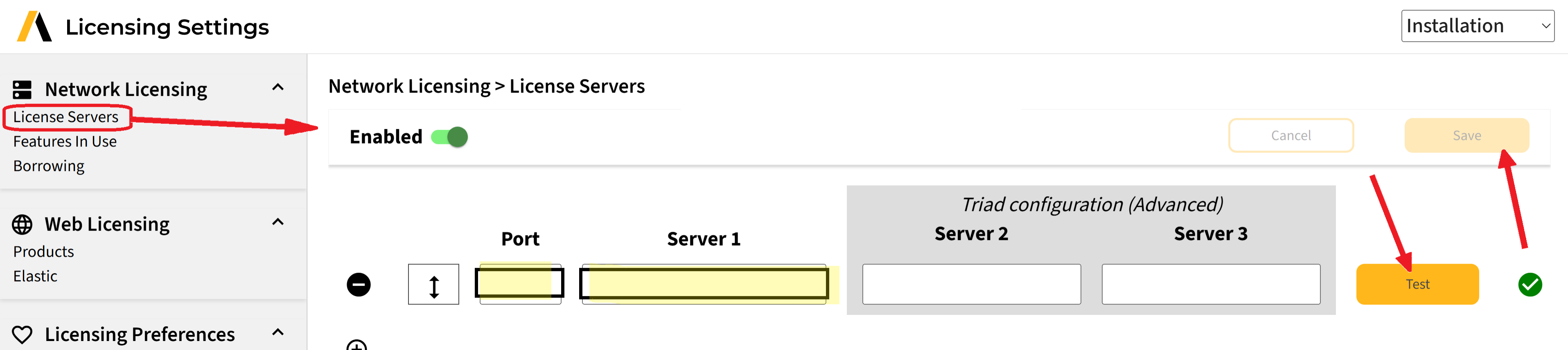
You need to point the client application to the license server. In Windows, browser to START -> STK ODTK 13 -> and right-click Ansys Client License Settings and select Run as Administrator. Enter the Port and Server name (or IP address). The default is 1055 unless you changed it in the license file. Click Test. If it passes click Save. You can enter more than one server and then the STK application attempts to check out a license from all of them in the order in which they are listed.
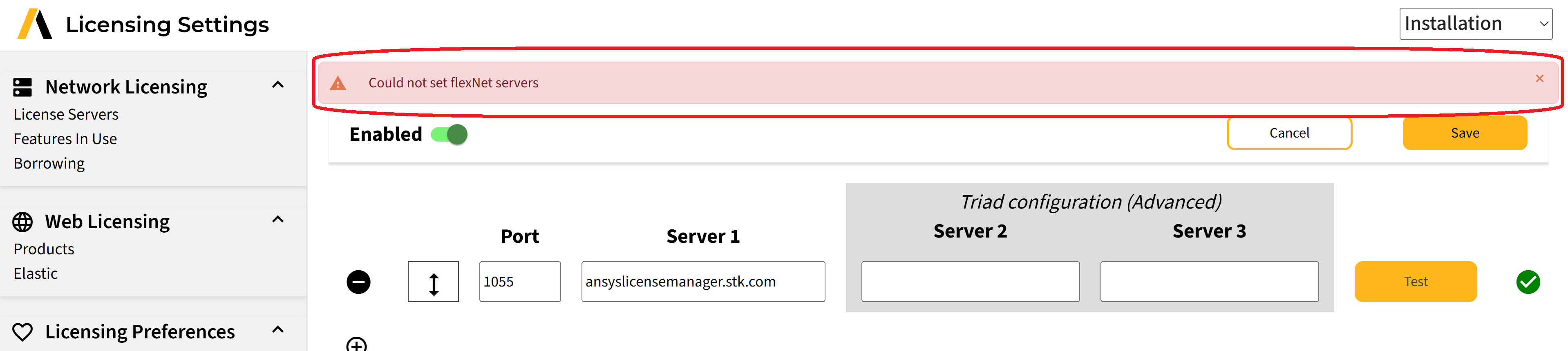
If you did not select Run as Administrator, you may see this error:
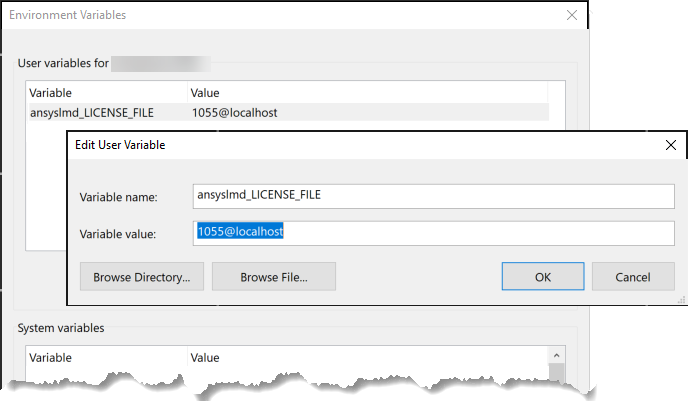
You can also set an environment variable, User variable, or System variable that may not require administrator permissions. The result is the same, the STK application finds the licenses.
Check available licenses
You can check to see which licenses are available and who is using them. Select the View Current License Usage in the Reporting field. This is the same as the 'lmstat' output. The report displays the license and who (if anyone) is using it.