Performance models are used to define the behavior of the aircraft in flight. For each flight stage (such as acceleration, cruise, descend), there are several types of performance models to choose from. Built-in models default to basic models that require minimum information to calculate a trajectory. Also available are AGI models that allow for more detailed calculation, such as sequencing climb by altitude/fuel flow/speed. These performance models can be accessed by right-clicking in the aircraft properties window under performance models (see figure 1). Finally, advanced flight models can be built from the advanced fixed wing tool. Advanced models use aircraft propulsion and aerodynamic parameters to determine performance models. Each performance model is described in its own Help topic. Aircraft Properties allow you to view and edit available performance models.
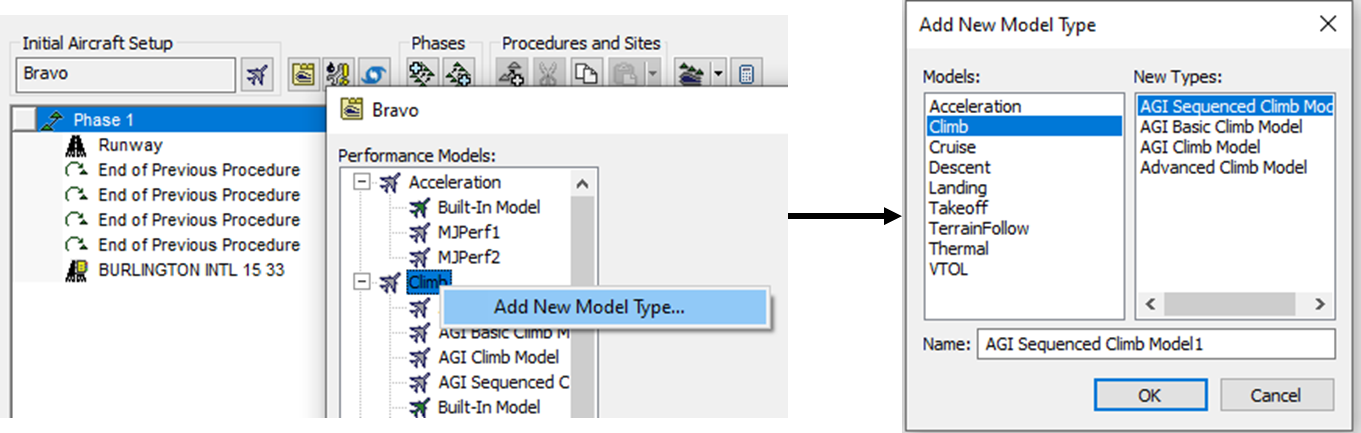
How an aircraft flies in aviator depends on the performance model definitions and the specific procedures used to build a mission. Some procedures (such as takeoff) will map directly to the corresponding performance model. Others, such as enroute, may apply several models, or have options than can override performance models. The goal of Aviator is to provide users the ability to create aircraft models that match their needs while also providing flexibility in how missions are flown.
Phases are another part of this flexibility. Using phases, users can apply different performance models during different parts of a missions. This could be useful to, for example, consider different operational procedures or different flight modes for an aircraft. To set performance models used in a particular phase, use phase properties.